Am I a Candidate for Dental Implants?
Updated June 30, 2026 | 6 minute read | Reviewed by Dr. Matthew Hudzinski, DMD
If you are missing a tooth, you have probably wondered whether implants are an option for you. Maybe you have heard you need "enough bone," or that a health condition rules you out.
The good news: most adults with missing teeth are candidates. Many things that seem like dealbreakers simply mean an extra step in planning.
At Hudzinski Dental in Mayfield Heights, we evaluate implant candidacy with 3D CBCT imaging and doctor-led planning for patients across Cleveland's east side. Here is what qualifies you, what complicates treatment, and how to get a clear answer.
The Short Answer
Candidacy comes down to five things: bone, gums, overall health, smoking, and age. Here is how each one usually plays out.
| Ideal Candidate | Often Still Eligible | |
|---|---|---|
| Jawbone | Enough bone to anchor the implant | Bone loss, often after grafting |
| Gums | Healthy, no active disease | Gum disease treated first |
| Overall health | Good general health | Well-controlled conditions, like diabetes |
| Smoking | Non-smoker | Willing to stop during healing |
| Age | Adult with jaw growth complete | Older adults with managed health |
The 5 Core Requirements
These are the factors every implant evaluation looks at, and what happens if one of them is not ideal.
1. Enough Jawbone
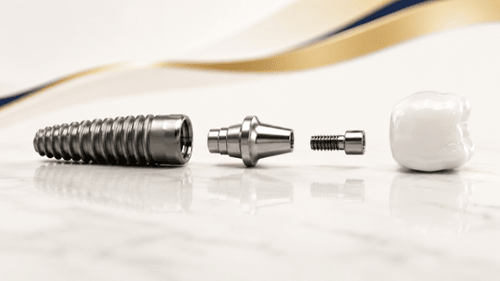
An implant is a titanium post that fuses with your jawbone, a process called osseointegration. It needs enough bone to anchor securely. Bone often shrinks after a tooth has been missing for a while, but that rarely ends the conversation. Bone grafting, a sinus lift, or shorter or angled implants can often solve it.
2. Healthy Gums
Active gum disease can infect the area around an implant and lead to peri-implantitis, a common cause of implant failure. The fix is simple in principle: treat the gum disease first. Once your gums are healthy and stable, implants can usually move forward.
3. Good Overall Health
Implant placement is a minor surgical procedure, and your body needs to heal well afterward. What matters is whether a condition is controlled. Well-managed diabetes, for example, does not automatically rule you out. Most patients with managed chronic conditions are still candidates.
4. Not Smoking
Smoking is the biggest lifestyle risk for implant failure. It reduces blood flow and slows healing. Smokers can still get implants, but we strongly recommend stopping before surgery and through the healing phase.
5. Commitment to Home Care
Implants are cared for almost exactly like natural teeth: brushing twice a day, cleaning around the implant daily, and regular checkups. An interdental brush or water flosser helps reach around the implant crown.
Good to know: A standard X-ray cannot fully show bone width or density. A 3D CBCT scan measures exactly how much bone you have and where nerves and sinuses sit, so we can plan implant size and position precisely before treatment begins.
Conditions That Add Steps, Not Barriers
These factors call for extra planning. In most cases, they do not rule implants out.
- Controlled diabetes. Medical clearance and closer follow-up during healing.
- Osteoporosis. 3D imaging, possible bone augmentation, and coordination with your physician.
- Bisphosphonate medications. A careful medication review before planning surgery.
- Teeth grinding. A night guard and the right crown material protect the implant.
- Autoimmune conditions. Medical clearance and timing around medications.
- Past head or neck radiation. Evaluated case by case based on dose, location, and time elapsed.
Missing a tooth?
Find out in one visit whether dental implants are right for you.
Request a Consultation Call (440) 585-4200When It Makes Sense to Wait
A few situations mean implants are not the right choice yet:
- Active cancer treatment
- Uncontrolled diabetes
- Heavy smoking with no plan to stop
- A jaw that is still growing, usually under age 18
"Not right now" rarely means "never." Finishing medical treatment, getting blood sugar under control, or quitting smoking can open the door later. In the meantime, a bridge, partial denture, or temporary replacement can fill the gap. We will tell you honestly which path makes sense.
If bone loss is the issue, our bone grafting page explains how we rebuild the foundation for an implant.
Is There an Age Limit?
There is a minimum, but no maximum. Implants are not placed until the jaw has finished growing, because an implant in a developing jaw can end up sitting too low as the bone around it grows.
For older adults, age alone is never the deciding factor. Bone quality, general health, and healing ability matter far more. Many patients in their 70s and 80s do very well with implants.
How the Candidacy Evaluation Works
The only way to know for sure is an in-person consultation. Here is what we look at, and what you will know by the end.
| Step | What We Learn |
|---|---|
| Health history | Conditions, medications, and smoking history |
| Oral exam | Gum health, remaining teeth, and your bite |
| 3D CBCT scan | Exact bone height, width, and density |
| Digital scan | A precise 3D model of your teeth for planning |
| Written plan | Candidacy, any prep work, timeline, and cost |
You will leave knowing whether you are a candidate today, whether any preparation is needed first, and what the full timeline and investment look like.
Cost and Insurance
Implant cost depends on how many teeth are being replaced and whether grafting or other prep is needed. Many dental plans contribute toward part of implant treatment, subject to your benefits and annual maximum. Our guide to dental implant cost in Cleveland breaks it down.
We are in network with Aetna, Delta Dental, Guardian, MetLife, and Principal, accept HSA and FSA cards, and offer financing through CareCredit. You will get a clear written estimate before treatment. See our financial information page for details.
Frequently Asked Questions
How do I know if I am a candidate for dental implants?
Most adults with missing teeth are candidates. The deciding factors are jawbone, gum health, overall health, smoking, and age. A consultation with a 3D CBCT scan gives you a definitive answer.
Can I get implants if I do not have enough bone?
Often, yes. Bone grafting, a sinus lift, or shorter or angled implants can make implants possible for many patients with bone loss. 3D imaging shows which option fits your case.
I have been missing a tooth for years. Is it too late?
No. A tooth missing for years usually means some bone loss, which may call for a graft first. That is a preparatory step, not a permanent barrier.
Am I too old for dental implants?
There is no upper age limit. Bone quality, general health, and healing ability matter far more than age, and many older adults are excellent candidates.
Can I get implants if I wear dentures?
Yes. A small number of implants can anchor a denture so it no longer slips, reducing or eliminating the need for adhesive.
Another dentist said I am not a candidate. Should I get a second opinion?
Yes, especially if the reason was bone loss or a health condition. With 3D imaging and modern planning, many of those barriers are now manageable.
Where can I get a dental implant consultation in Cleveland?
Hudzinski Dental offers dental implant consultations with 3D CBCT imaging at 1232 SOM Center Road in Mayfield Heights, serving patients across Cleveland's east side, including Beachwood, Lyndhurst, Pepper Pike, Highland Heights, Solon, and Gates Mills. Call (440) 585-4200 to schedule.
A Natural Next Step
One consultation. A clear answer.
Dr. Kevin Fryer founded our practice in 1992, and Dr. Matthew Hudzinski now leads it with the same personal care and modern 3D technology. If you are missing a tooth, we would be glad to help you explore your options.
Schedule a Consultation Dental ImplantsRelated Reading
- Dental Implant Cost in Cleveland
- Same-Day Implants: What to Know Before Your Consultation
- Cosmetic Dentist in Cleveland: A Complete Guide
This article is for general education and is not a substitute for an in-person exam. Implant candidacy can only be determined through a clinical examination and diagnostic imaging. Hudzinski Dental, 1232 SOM Center Road, Mayfield Heights, OH 44124 | (440) 585-4200