100% { "@context": "https://schema.org", "@graph": [ { "@type": "MedicalProcedure", "@id": "https://www.hudzinskidental.com/services/dental-implants/41559#procedure", "name": "Dental implant placement", "procedureType": "https://schema.org/SurgicalProcedure", "bodyLocation": "Jaw", "howPerformed": "Planned on a CBCT 3-D scan and placed under local anesthesia through a custom 3-D printed surgical guide; after three to six months of healing, a custom crown, bridge or denture is attached.", "url": "https://www.hudzinskidental.com/services/dental-implants/41559", "provider": { "@type": "Dentist", "name": "Hudzinski Dental", "telephone": "+1-440-585-4200", "address": { "@type": "PostalAddress", "streetAddress": "1232 SOM Center Road", "addressLocality": "Mayfield Heights", "addressRegion": "OH", "postalCode": "44124", "addressCountry": "US" }, "url": "https://www.hudzinskidental.com/" } }, { "@type": "FAQPage", "@id": "https://www.hudzinskidental.com/services/dental-implants/41559#faq", "mainEntity": [ { "@type": "Question", "name": "Who can get a dental implant?", "acceptedAnswer": { "@type": "Answer", "text": "Most adults with missing teeth are candidates. Dr. Hudzinski looks for healthy gums, enough jawbone to anchor the implant, good overall health, and a commitment to daily care. Smoking raises the risk of implant failure. Not enough bone? Bone grafting or a sinus lift, done in our office, can often make you a candidate. A 3D scan and exam will give you a clear answer." } }, { "@type": "Question", "name": "What's the difference between implants, bridges, and dentures?", "acceptedAnswer": { "@type": "Answer", "text": "An implant replaces a missing tooth root directly and stimulates the jawbone the way a natural tooth does, without involving neighboring teeth. A bridge relies on the teeth on either side of the gap for support, requiring them to be reshaped. A removable denture rests on the gum tissue and requires periodic adjustment as the jawbone gradually changes shape underneath it." } }, { "@type": "Question", "name": "What is osseointegration, and why does it matter?", "acceptedAnswer": { "@type": "Answer", "text": "Osseointegration is the biological process where the jawbone fuses directly to the titanium implant body over three to six months, creating a stable foundation strong enough to support normal chewing forces. This fusion is what allows an implant to function like a natural tooth root, and it's the reason implant treatment spans months rather than a single appointment." } }, { "@type": "Question", "name": "How long do dental implants last?", "acceptedAnswer": { "@type": "Answer", "text": "A properly placed and well-maintained implant can last 25 years or more, with a documented long-term success rate of roughly 95–98% over 10 years. The visible crown on top may eventually need replacement due to normal wear, but the titanium post fused to the bone is designed to be a permanent foundation." } }, { "@type": "Question", "name": "How do I care for a dental implant?", "acceptedAnswer": { "@type": "Answer", "text": "Implants are cared for almost identically to natural teeth - brushing twice daily and flossing daily around the implant crown, ideally with an interdental brush or water flosser where a standard brush can't reach as effectively. Consistent hygiene and regular professional cleanings are what allow an implant to last decades." } } ] } ] } Skip to main content
Dental Implants
Lasting Tooth Replacement

Dental implants offer a long-term solution to replace missing teeth.

Dental Implants | Dentist

Dental Implants in Mayfield Heights, OH

Today, you have more options than ever to replace missing teeth. At Hudzinski Dental, we’ll work with you to find the solution that meets all your needs, including long-lasting dental implants.

Missing a Tooth? Here's What Most People Don't Know

Losing a tooth changes more than your smile. You start chewing on one side. Neighboring teeth slowly drift into the gap. And the bone that held the root begins to shrink, because nothing is stimulating it anymore. A dental implant is the one replacement that addresses all three problems, because it replaces the root, not just the visible tooth.

At Hudzinski Dental in Mayfield Heights, we plan every implant on a 3-D scan, place it with a custom surgical guide, and restore it with a crown, bridge or denture designed to match your smile. Patients come to us from Mayfield Heights, Lyndhurst, Beachwood, Pepper Pike and across Cleveland's east side.

Call (440) 585-4200 or request an implant consultation online.

What Is a Dental Implant?

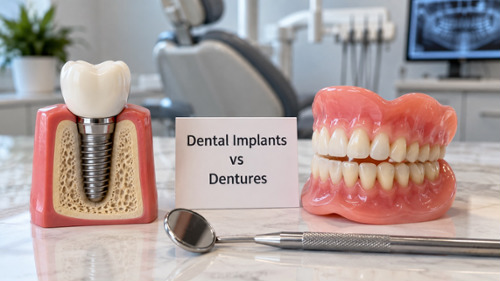
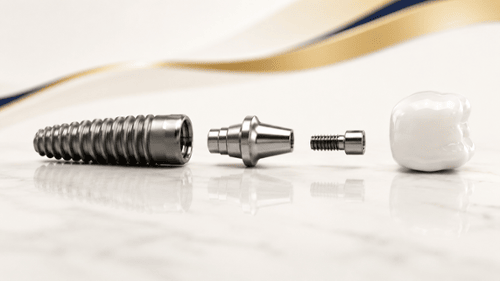
A dental implant is a small titanium post that acts as an artificial tooth root. We place it in the jawbone, and over the next few months the bone fuses to it. That process is called osseointegration. Once the implant is stable, we attach a connector (an abutment) and a custom restoration on top.

The result looks like a tooth, feels like a tooth and is cared for like a tooth. It doesn't rely on neighboring teeth for support, and it doesn't come out at night.

Why Patients Choose Implants Over Bridges or Dentures

Dental implants offer advantages that other tooth replacement options can't match:
Built to last
With good home care and regular cleanings, a well-placed implant can last 25 years or more. The crown on top may eventually need replacing from normal wear, but the post itself is meant to be permanent.
Secure and stable
An implant is anchored in bone, so it won't shift or slip the way a removable denture can. Eat, speak and laugh without thinking about your teeth.
Protects your jawbone
Implants are the only tooth replacement that stimulates the bone the way a natural root does. That helps preserve the shape of your jaw and face over time.
Leaves healthy teeth alone
A traditional bridge requires reshaping the teeth on either side of a gap. An implant stands on its own. Comparing the two? Read our related blog post - Dental Bridge vs. Implant: Which Is Better for One Missing Tooth?

Frequently Asked Questions

Most adults with missing teeth are candidates. Dr. Hudzinski looks for healthy gums, enough jawbone to anchor the implant, good overall health, and a commitment to daily care. Smoking raises the risk of implant failure. Not enough bone? Bone grafting or a sinus lift, done in our office, can often make you a candidate. A 3D scan and exam will give you a clear answer.

An implant replaces a missing tooth root directly and stimulates the jawbone the way a natural tooth does, without involving neighboring teeth. A bridge relies on the teeth on either side of the gap for support, requiring them to be reshaped. A removable denture rests on the gum tissue and requires periodic adjustment as the jawbone gradually changes shape underneath it.

Osseointegration is the biological process where the jawbone fuses directly to the titanium implant body over three to six months, creating a stable foundation strong enough to support normal chewing forces. This fusion is what allows an implant to function like a natural tooth root, and it's the reason implant treatment spans months rather than a single appointment.

A properly placed and well-maintained implant can last 25 years or more, with a documented long-term success rate of roughly 95–98% over 10 years. The visible crown on top may eventually need replacement due to normal wear, but the titanium post fused to the bone is designed to be a permanent foundation.

Implants are cared for almost identically to natural teeth - brushing twice daily and flossing daily around the implant crown, ideally with an interdental brush or water flosser where a standard brush can't reach as effectively. Consistent hygiene and regular professional cleanings are what allow an implant to last decades.

Dental Implant Treatment

The first step for getting a dental implant is a thorough examination. Dr. Hudzinski uses advanced 3-D imaging technology to evaluate the bone in the area to ensure it’s strong and dense enough to support the implant. If it isn't, all is not lost. You may be a candidate for a bone grafting procedure that will allow you to get a dental implant in the future. 

The Dental Implant Process, Step by Step

1. Consultation and 3-D scan

We examine your mouth and take a CBCT 3-D scan to measure bone height, width and density and to locate nerves and sinuses. You'll leave with a clear plan and a written estimate.

2. Preparation, if needed

If a tooth needs to come out, or the bone is too thin, we may place a bone graft first. Often we can graft at the same visit as the extraction. Learn more about extractions and bone grafting.

3. Guided placement

Using a surgical guide made on our in-office 3-D printer, we place the implant under local anesthesia. Sedation is available if you'd like to be more relaxed.

4. Healing

Over roughly three to six months, the bone fuses to the implant. In the right cases, a temporary tooth can be placed the same day. See Same-Day Implants: What to Know, which also walks through our staged, fully digital process.

5. Your final restoration

We scan the implant and attach your custom crown, bridge or denture, matched to your natural teeth.

  • Dr. Matthew Hudzinski DMD

    Dr. Matthew Hudzinski DMD

    Dr. Matthew Hudzinski joined Dr. Fryer as an associate in 2024 and became the practice owner in 2025, continuing the patient-centered culture of excellence Dr. Fryer established.

    Dr. Hudzinski earned a Bachelor of Science in …

    View More
  • Dr. Kevin Fryer

    Dr. Kevin Fryer

    Dr. Kevin Fryer's connection to Hudzinski Dental runs deep; he founded the practice in 1992 and spent more than three decades building it into the patient-centered home it is today. Though he transitioned ownership to …

    View More

Is a Dental Implant Right for You?

Why Choose Hudzinski Dental for Implants

  • A practice with roots since 1992. Dr. Kevin Fryer founded this office and mentored Dr. Matthew Hudzinski, DMD, who now leads the practice. Both doctors see patients.
  • Planning and restoration under one roof. We scan, plan, guide and restore in our office, so you're not passed between offices for every step.
  • Comfort first. Nervous about surgery? Sedation options help you stay relaxed.
  • Clear plans, no surprises. You'll see your 3-D scan, your options and your estimate before anything begins.

From Dr. Hudzinski: "We get a ton of value from the 3-D scan. It finds things you'd otherwise never know about, like a small infection starting at the tip of an old root canal that isn't causing any pain yet."

Dental Implants Technology

Dentist pointing to 3D CBCT cone beam scan showing detailed jaw and teeth imaging on monitor

CBCT Cone Beam Technology

A CBCT scan produces a 3D image of your teeth, jaw, and surrounding bone. Unlike standard x-rays, it shows depth and structure from every angle. We use it to plan dental implants, evaluate bone volume, and assess complex cases before treatment begins. Having this level of detail before we start helps us place implants accurately and avoid surprises during procedures.

3D printer printing a tooth model with digital imaging displayed on monitor

3D Printing

Our in-office 3D printer creates custom dental appliances with precision and speed. We use it to fabricate surgical guides for implant placement, retainers, night guards, and study models. Because everything is made on-site, you spend less time waiting and more time benefiting from appliances designed to fit your mouth exactly.