Sleep Apnea and Snoring
Get a Good Night's Rest

A simple oral appliance may be all you need to get more restful sleep.

Sleep Apnea and Snoring | Dentist

Sleep Apnea and Snoring

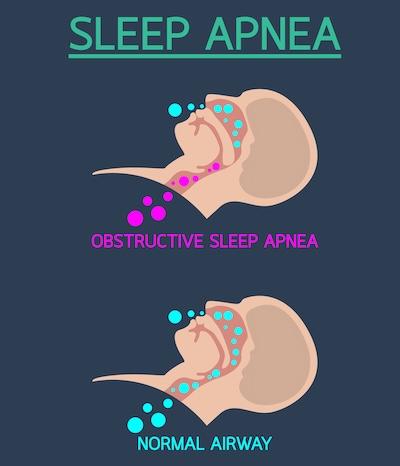
Diagram comparing an obstructed airway in sleep apnea with a normal open airway.Obstructive sleep apnea (OSA) occurs when the soft tissues in your throat relax during sleep and partially or completely block your airway. As your brain senses a drop in oxygen, you briefly awaken to restart breathing, often without realizing it. This cycle can repeat dozens or even hundreds of times per night, preventing you from reaching the deep, refreshing sleep your body needs.
Why See a Dentist for Sleep Apnea?

You might wonder what a dentist has to do with sleep apnea treatment; however, it makes sense when you consider that OSA involves structures of your mouth and throat, including the jaw, tongue, and soft palate.

As a sleep apnea dentist, Dr. Matthew Hudzinski understands how these structures affect your airway. In collaboration with a sleep physician, he may recommend a simple oral appliance for mild to moderate OSA as a safe alternative to CPAP.

Why Treating Sleep Apnea Matters

Whether through CPAP or oral appliance therapy, treating OSA can make a real difference in how you feel and function:
Better Sleep Quality
Treatment allows you to reach the deep, restorative stages of sleep your body needs. Many patients notice that they wake feeling refreshed rather than exhausted.
Protects Heart Health
Untreated sleep apnea strains your heart and blood vessels. Effective treatment can reduce your risk of high blood pressure, heart disease, and stroke.
Safer Daily Functioning
Drivers with untreated OSA are more likely to be in automobile accidents due to chronic fatigue, daytime sleepiness, and decreased reaction times.
Improved Focus and Comfort
When your brain gets adequate oxygen at night, you think more clearly during the day. Many patients report better concentration and fewer mood swings.

Frequently Asked Questions

Common nighttime signs include loud snoring, gasping or choking during sleep, restless sleep, and waking with a dry mouth. Daytime signs include morning headaches, fatigue after a full night's sleep, trouble concentrating, and irritability. Not everyone who snores has sleep apnea. Left untreated, it's linked to high blood pressure, heart disease, stroke, and type 2 diabetes. If these sound familiar, schedule a consultation.

Yes. The American Academy of Sleep Medicine recognizes dentists trained in dental sleep medicine as qualified providers of oral appliance therapy, working collaboratively with sleep physicians and your primary care doctor throughout treatment.

A custom-fitted oral appliance, worn during sleep much like a sports mouthguard, gently advances the lower jaw forward to keep the airway open and prevent the throat tissue collapse that causes apnea events. Randomized trials show outcomes similar to CPAP for blood pressure and quality of life, with significantly higher long-term compliance.

Loud, chronic snoring, gasping or choking sounds during sleep, waking up unrefreshed despite a full night's sleep, morning headaches, and difficulty concentrating during the day are among the most common warning signs. Checking three or more of these is a meaningful reason to schedule a screening.

Yes, a formal diagnosis is required before treatment. If you haven't been tested, we can help coordinate an at-home sleep test, which monitors your breathing, oxygen levels, and heart rate overnight in your own bed, with results available within a few days.

Oral Appliance Therapy: A CPAP Alternative

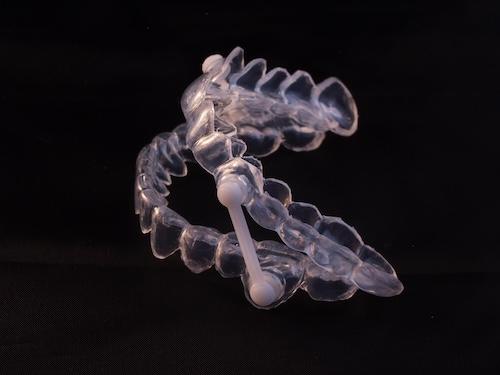
Clear oral appliance for sleep apnea treatment.While a CPAP machine is the standard of care for moderate to severe OSA, many patients resist using it because it is too bulky, noisy, or inconvenient for travel. For them, oral appliance therapy may be a better fit.

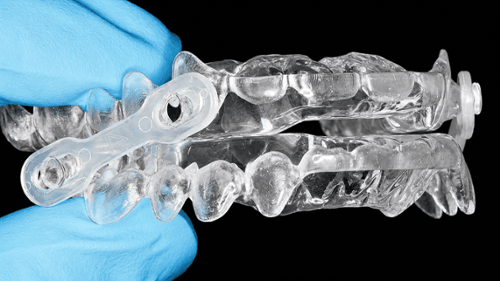
A mandibular advancement device (MAD) is a custom-fitted oral appliance that resembles a sports mouthguard. It gently repositions the lower jaw forward, helping to keep the airway open during sleep.

These devices are appropriate for patients with mild to moderate sleep apnea. For severe cases, CPAP may still be the most effective option.

What About Snoring?

Snoring and sleep apnea are closely related. Snoring happens when air passes through a narrowed airway, causing the surrounding tissues to vibrate. While not everyone who snores has sleep apnea, loud, chronic snoring is one of the most common warning signs.

  • Dr. Matthew Hudzinski DMD

    Dr. Matthew Hudzinski DMD

    Dr. Matthew Hudzinski joined Dr. Fryer as an associate in 2024 and became the practice owner in 2025, continuing the patient-centered culture of excellence Dr. Fryer established.

    Dr. Hudzinski earned a Bachelor of Science in …

    View More
  • Dr. Kevin Fryer

    Dr. Kevin Fryer

    Dr. Kevin Fryer's connection to Hudzinski Dental runs deep; he founded the practice in 1992 and spent more than three decades building it into the patient-centered home it is today. Though he transitioned ownership to …

    View More

Take the First Step Toward Better Sleep

At Hudzinski Dental, our focus is on oral health, but we also focus on overall health and safety. If you suspect sleep apnea is affecting your health or quality of life, we'll help find a solution that works for you.

Call our Mayfield Heights, OH, office at (440) 585-4200 or use our online form to schedule a consultation. We welcome patients from Gates Mills, Chesterland, Hunting Valley, Kirtland, and beyond.