Do You Have Sleep Apnea? The Warning Signs Most People Miss
Updated June 27, 2026 | 7 minute read | Reviewed by Dr. Matthew Hudzinski, DMD
You sleep eight hours and still wake up exhausted. Your partner mentions the snoring. Your dentist points out worn teeth. Most people treat these as separate problems.
Often, they are the same problem: sleep apnea. It is common, frequently missed, and very treatable.
At Hudzinski Dental in Mayfield Heights, Dr. Matthew Hudzinski helps patients across Cleveland's east side recognize the signs and find a comfortable treatment, often without CPAP. Here is what to look for.
Quick answer: The most common signs are loud snoring, gasping or choking at night, waking up tired, morning headaches, brain fog, irritability, dry mouth, and waking to urinate two or more times a night.
If three or more sound familiar, it is worth getting evaluated.
What Is Sleep Apnea?
Sleep apnea is a condition where your breathing repeatedly stops and starts during sleep. Each pause can last from a few seconds to over a minute, and it can happen dozens of times a night.
The most common type is obstructive sleep apnea (OSA), which happens when soft tissue in the throat collapses and blocks the airway. Most people never remember waking up. They only notice the aftermath: exhaustion, headaches, and poor focus.
Severity is measured by how many breathing events occur per hour of sleep:
| Severity | Events per Hour |
|---|---|
| Mild | 5 to 14 |
| Moderate | 15 to 29 |
| Severe | 30 or more |
Why So Many People Go Undiagnosed
Sleep apnea usually develops gradually. Many of our patients from Mayfield Heights, Beachwood, Lyndhurst, and Pepper Pike blamed their symptoms on age, stress, or a busy schedule for years.
The fatigue, headaches, and grinding feel unrelated, so nobody connects them to an airway problem. Recognizing the pattern early can improve daily life and lower long-term health risks.
The Sleep Apnea Symptom Checklist
Be honest with yourself. If three or more apply, sleep apnea may be affecting your health.
At Night
- Loud, chronic snoring
- Gasping, choking, or snorting during sleep
- A partner notices you stop breathing
- Dry mouth or sore throat on waking
- Getting up to urinate two or more times
- Night sweats not explained by temperature
- Teeth grinding or clenching
- Restless, broken sleep
During the Day
- Waking unrefreshed after 7 to 9 hours of sleep
- Morning headaches that fade as the day goes on
- Dozing off easily in quiet settings
- Trouble concentrating or remembering things
- Irritability, mood swings, or low mood
- Low energy or motivation
- Reduced sex drive
- Drowsiness while driving
Good to know: Snoring plus waking unrefreshed plus daytime fatigue is one of the most telling combinations. That alone is a good reason to get screened.
Symptoms You Would Never Connect to Sleep
Several signs of sleep apnea look completely unrelated. One of the most common clues we see is tooth wear from nighttime grinding. Many patients come in for worn teeth, cracked fillings, or jaw soreness before learning their airway may be part of the cause.
| Symptom | The Sleep Apnea Link |
|---|---|
| Teeth grinding | The jaw may clench as the body reacts to a blocked airway. |
| High blood pressure | Oxygen drops trigger a stress response that raises pressure. |
| Frequent nighttime urination | Pressure changes signal the kidneys to make more urine. |
| Anxiety or depression | Broken sleep disrupts emotional regulation. |
| Nighttime acid reflux | Straining to breathe can push stomach acid upward. |
| Getting sick often | Poor sleep weakens immune function over time. |
If you have been told you grind and need a nightguard, ask one more question: could this be related to my airway? A nightguard protects teeth, but it does not address the breathing problem behind the grinding.
Sleep Apnea in Women Looks Different
Women are often underdiagnosed because they do not fit the classic image of a loud-snoring man. Symptoms tend to be quieter and are easy to mistake for stress or hormones.
Common Signs in Women
- Fatigue and exhaustion
- Anxiety, low mood, or insomnia
- Morning headaches
- Frequent nighttime waking
- Softer or intermittent snoring
Added Risk Factors
- Pregnancy
- Menopause and postmenopausal hormone changes
- Polycystic ovary syndrome (PCOS)
If you have three or more daytime symptoms, mention sleep apnea to your physician, even if nighttime signs seem mild.
The Health Risks of Leaving It Untreated
Untreated sleep apnea is not just a sleep problem. Over time, it affects your heart, metabolism, and brain.
| Condition | How Sleep Apnea Contributes |
|---|---|
| High blood pressure | Repeated oxygen drops keep the stress response switched on. |
| Heart disease and AFib | Nightly strain stresses the cardiovascular system. |
| Type 2 diabetes | Poor sleep affects insulin sensitivity. |
| Stroke | Oxygen dips and pressure spikes raise risk. |
| Car accidents | Daytime drowsiness slows reaction time. |
| Memory and mood | Fragmented sleep impairs focus, memory, and mood. |
The good news: treatment works. Patients commonly report more energy, sharper focus, fewer headaches, and quieter nights, often within the first few weeks.
Recognize three or more signs?
Start with a free sleep apnea consultation to see if testing makes sense.
Request a Consultation Call (440) 585-4200How a Dentist Treats Sleep Apnea Without CPAP
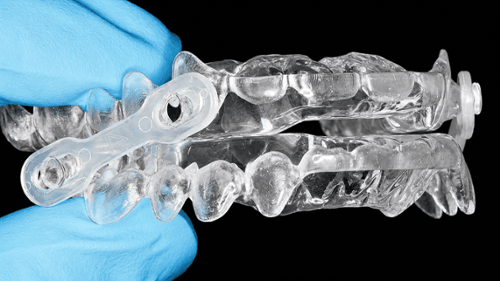
CPAP is effective, but many people struggle with the mask, the noise, or sleeping attached to a machine. For many patients, a custom oral appliance is a simpler alternative.
The appliance looks similar to a sports mouthguard. It gently positions the lower jaw forward during sleep, helping keep the airway open.
| CPAP | Oral Appliance | |
|---|---|---|
| Best for | All severities, when used consistently | Mild to moderate OSA and CPAP-intolerant patients |
| Equipment | Mask, hose, and machine | Small custom mouthpiece |
| Noise | Machine hum | Silent |
| Travel | Bulky to pack | Fits in a pocket |
| Managed by | Sleep physician | Dentist, coordinated with your physician |
For a deeper comparison, read Oral Appliance Therapy vs. CPAP.
The Process: From Screening to Better Sleep
Here is what getting an oral appliance looks like at Hudzinski Dental.
1. Consultation
We review your symptoms, medical history, and any past sleep study results.
2. At-Home Sleep Test
If you have not been diagnosed, we help coordinate a simple at-home test. A small wearable device tracks your breathing, oxygen, and heart rate overnight in your own bed. A qualified provider reviews the results and confirms the diagnosis.
3. Digital Scan
We capture precise 3D scans of your teeth and bite. No impression putty.
4. Fitting
Your custom appliance is delivered and adjusted for comfort and the right jaw position.
5. Follow-Up
We fine-tune the fit, and a follow-up sleep test confirms the appliance is working. We keep your physician in the loop throughout.
Cost and Insurance
Custom oral appliances typically range from $1,800 to $3,500, depending on the device and your case. Because sleep apnea is a medical condition, treatment is usually billed to medical insurance rather than dental.
Our team handles billing and pre-authorization, and we offer financing through CareCredit. See our financial information page for details.
Frequently Asked Questions
What are the most common signs of sleep apnea?
The most common signs are loud snoring, gasping or choking during sleep, waking up tired, morning headaches, trouble concentrating, irritability, dry mouth, and waking to urinate two or more times a night. Three or more is a strong reason to get evaluated.
Can a dentist really treat sleep apnea?
Yes. Dentists trained in dental sleep medicine provide custom oral appliance therapy for appropriate patients, usually those with mild to moderate obstructive sleep apnea or those who cannot tolerate CPAP. Care is coordinated with your physician.
I snore but never feel tired. Could I still have sleep apnea?
Yes. Some people with sleep apnea do not feel obviously tired. Loud, regular snoring is still worth evaluating, especially if a partner notices pauses in your breathing.
My partner says I stop breathing at night. What should I do?
Take it seriously. Witnessed breathing pauses are one of the clearest warning signs. A screening can determine whether a sleep test is appropriate.
Does insurance cover an oral appliance for sleep apnea?
Often, yes. Because sleep apnea is a medical condition, oral appliance therapy is usually billed to medical insurance. Custom appliances typically range from $1,800 to $3,500, and financing is available.
I tried CPAP and could not tolerate it. Can an oral appliance work?
For many CPAP-intolerant patients, yes. A custom oral appliance is small, silent, and easier to wear consistently, which matters because the best treatment is the one you will actually use.
Where can I get sleep apnea treatment in Cleveland?
Hudzinski Dental offers sleep apnea screening and oral appliance therapy at 1232 SOM Center Road in Mayfield Heights, serving patients across Cleveland's east side, including Beachwood, Lyndhurst, Pepper Pike, Highland Heights, Solon, and Gates Mills. Call (440) 585-4200 to schedule.
A Natural Next Step
Better sleep starts with one conversation.
Dr. Matthew Hudzinski works alongside sleep physicians and primary care providers across Cleveland to help patients rest better, without forcing a one-size-fits-all solution. Your consultation is free.
Schedule a Consultation Sleep Apnea TreatmentRelated Reading
- Sleep Apnea Treatment Guide
- Oral Appliance Therapy vs. CPAP: Which Sleep Apnea Treatment Is Right for You?
- Same-Day CEREC Crowns Explained
This article is for general education and is not a substitute for medical advice or an in-person evaluation. If you suspect sleep apnea, consult a qualified healthcare provider. Hudzinski Dental, 1232 SOM Center Road, Mayfield Heights, OH 44124 | (440) 585-4200