Invisalign vs. Braces in Cleveland: Which Is Right for You?
Updated October 3, 2026 | 6 minute read | Reviewed by Dr. Matthew Hudzinski, DMD
Most adults who want straighter teeth ask the same thing first: clear aligners or braces? Both work. The real differences are how they fit into your life, what they cost, and which cases each one handles best.
Invisalign is nearly invisible and removable. Braces are fixed and work around the clock. For most adult cases the cost is closer than people expect.
At Hudzinski Dental in Mayfield Heights, Dr. Matthew Hudzinski and Dr. Kevin Fryer help patients across Cleveland's east side make this choice with a digital scan, not a guess. Here is an honest side-by-side so you know what to ask at your consultation.
Invisalign vs. Braces at a Glance
For most adults with mild to moderate crowding, spacing, or relapse after old braces, Invisalign is discreet, comfortable, and often similar in cost. For severe crowding or complex bite correction, braces are usually more predictable.
| Braces | Invisalign | |
|---|---|---|
| Typical Cleveland cost | $3,000 to $5,500 (metal) | $3,500 to $6,500 |
| Treatment time | 18 to 24 months | 12 to 18 months |
| Appearance | Visible brackets and wires | Nearly invisible |
| Removable | No | Yes |
| Food restrictions | No hard, sticky, or chewy foods | None |
| Daily commitment | Works on its own | Wear 20 to 22 hours a day |
| Best for | Complex cases, many teens | Adults, mild to moderate cases |
How Each One Works
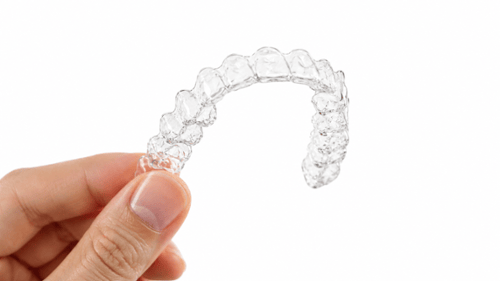
Invisalign uses a series of custom clear trays, each one shifting your teeth slightly. You switch to a new set every one to two weeks. Small tooth-colored attachments help the trays grip and guide harder movements.
Braces use brackets bonded to each tooth and connected by a wire that is adjusted at regular visits. Because they are fixed, braces work full time without you having to remember anything.
Good to know: Compliance is the biggest difference between the two. Invisalign only moves teeth while the trays are in. Under-wearing them is the most common reason treatment runs longer than planned.
Cost in Cleveland
The price gap has narrowed. In most mild to moderate cases, the difference is small enough that fit and lifestyle should drive the decision more than cost.
| Treatment | Typical Range | Typical Length |
|---|---|---|
| Invisalign Lite or Express | $1,800 to $3,000 | 6 to 10 months |
| Invisalign Comprehensive | $3,500 to $6,500 | 12 to 18 months |
| Invisalign, complex bite | $6,000 to $8,000 | 18 to 24 months |
| Metal braces | $3,000 to $5,500 | 18 to 24 months |
| Ceramic braces | $3,500 to $6,500 | 18 to 24 months |
| Lingual braces | $6,000 to $9,000 | 18 to 30 months |
For a deeper look at what drives the price, see our guide to Invisalign cost in Cleveland.
Daily Life During Treatment
Treatment lasts a year or more, so it has to work with meetings, meals, travel, and photos.
1. Life with Invisalign
- Eat what you like. Trays come out for meals.
- Brush and floss normally. No brackets to clean around.
- Discreet. Most people will not notice them in conversation.
- Smooth and comfortable. Expect pressure for a day or two with each new tray.
2. Life with Braces
- Nothing to remember. They work full time.
- Food limits. Hard, sticky, and crunchy foods are off the menu.
- More cleaning time. Floss threaders or a water flosser help.
- Occasional repair visits. A loose bracket or poking wire may need attention.
Not sure which option fits your smile?
A quick digital scan shows what Invisalign can do for your teeth before you commit.
Request a Consultation Call (440) 585-4200What Invisalign Can and Cannot Fix
Today's aligners handle far more than they used to. Still, Invisalign moves teeth, not jaw bones, so some cases are better served by braces.
| Concern | Invisalign Fit |
|---|---|
| Mild to moderate crowding | Excellent |
| Gaps and spacing | Excellent |
| Relapse after old braces | Excellent, often a short course |
| Mild to moderate overbite | Good |
| Crossbite, underbite, open bite | Case by case |
| Impacted teeth | Usually braces |
| Skeletal jaw discrepancies | Braces, sometimes with surgery |
A note on mail-order aligners: Without an in-person exam and X-rays, teeth can look straighter while the bite, roots, or bone support go unchecked. We recommend doctor-supervised treatment.
Which Is Right for You?
Invisalign is often the better fit if you:
- Want a discreet option for work and social life
- Have mild to moderate crowding, spacing, or overbite
- Had braces before and your teeth have shifted
- Can commit to wearing trays 20 to 22 hours a day
Braces are often the better fit if you:
- Have severe crowding or major rotations
- Need complex bite correction or extractions for space
- Prefer treatment that works without daily effort
We will tell you honestly which approach gives you the best result, not just the most convenient one.
Wondering if it is too late? Our guide on Invisalign for adults over 40 covers what changes with age.
Insurance and Financing
Dental plans with orthodontic coverage usually treat Invisalign the same as braces, often contributing $1,000 to $3,000 up to your lifetime orthodontic maximum.
We are in network with Aetna, Delta Dental, Guardian, MetLife, and Principal, accept HSA and FSA cards, and offer financing through CareCredit. Our team will review your benefits and give you a clear estimate before treatment. See our financial information page for details.
Frequently Asked Questions
Is Invisalign as effective as braces for adults?
For mild to moderate cases, yes. Invisalign works well for crowding, spacing, and many bite concerns. Severe crowding, impacted teeth, and skeletal bite problems usually respond more predictably to braces.
How much does Invisalign cost in Cleveland compared to braces?
A typical adult Invisalign case in the Cleveland area runs about $3,500 to $6,500. Metal braces usually run $3,000 to $5,500. Your exact cost depends on case complexity, treatment length, and insurance.
Which is faster, Invisalign or braces?
For mild to moderate cases, Invisalign is often faster, typically 12 to 18 months compared with 18 to 24 months for braces. For complex bite correction, braces are usually faster and more predictable.
What happens if I do not wear my Invisalign trays enough?
Teeth only move while the trays are in. Under-wearing slows progress, trays may stop fitting, and extra refinement trays may be needed, which can add months to treatment.
Does insurance cover Invisalign in Ohio?
Many plans with orthodontic benefits cover Invisalign the same way they cover braces, often $1,000 to $3,000 toward treatment. HSA and FSA funds can also be used. Hudzinski Dental will verify your benefits before you start.
Where can I get Invisalign in Cleveland?
Hudzinski Dental offers Invisalign at 1232 SOM Center Road in Mayfield Heights, serving patients across Cleveland's east side, including Beachwood, Lyndhurst, Pepper Pike, Highland Heights, Solon, and Gates Mills. Call (440) 585-4200 to schedule a consultation.
A Natural Next Step
One scan. A clear answer.
Dr. Kevin Fryer founded our practice in 1992, and Dr. Matthew Hudzinski now leads it with the same personal care and modern digital technology. If you have been thinking about straightening your teeth, we would be glad to talk about our commplimentary Invisalign consultations at Hudzinski Dental.
Schedule a Consultation Invisalign at Hudzinski DentalRelated Reading
- Invisalign Cost in Cleveland
- Invisalign for Adults Over 40
- Cosmetic Dentist in Cleveland: A Complete Guide
This article is for general education and is not a substitute for an in-person exam. Cost ranges are 2026 Northeast Ohio estimates; your plan and cost are confirmed after an exam and digital scan. Hudzinski Dental, 1232 SOM Center Road, Mayfield Heights, OH 44124 | (440) 585-4200