Dental Crown vs. Filling: How to Know Which One Your Tooth Needs
Updated October 2, 2026 | 6 minute read | Reviewed by Dr. Matthew Hudzinski, DMD
You have been told a tooth needs work. Now the real question: is a filling enough, or does it need a crown?
The answer is rarely about the size of the cavity. It comes down to how much healthy tooth is left once decay or damage is removed.
At Hudzinski Dental in Mayfield Heights, Dr. Matthew Hudzinski and Dr. Kevin Fryer make that call for patients across Cleveland's east side using digital imaging and a careful exam. Here is how they decide, and what each option means for you.
The Real Difference Between a Filling and a Crown
A filling patches part of a tooth. The decayed area is removed and rebuilt with tooth-colored composite, bonded to the healthy structure around it. The rest of your natural tooth stays as it is.
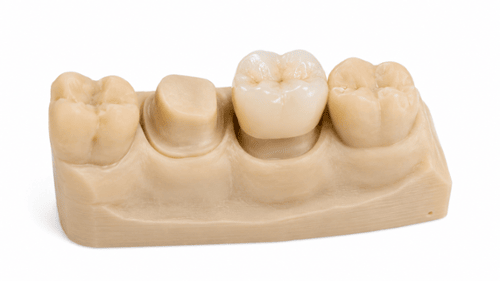
A crown covers the whole tooth. The tooth is reshaped and capped with a full-coverage ceramic restoration that holds it together and protects it from fracture.
Both fix decay and damage. The difference is whether the remaining tooth is strong enough to hold a patch, or needs to be reinforced from the outside.
Signs a Filling Is All You Need
- The cavity is small to moderate. Decay is contained and the tooth's shape and biting surface are intact.
- Most of the tooth is healthy. As a general guide, if about two-thirds of the tooth remains after decay is removed, it can usually support a filling.
- There is no crack. Isolated decay without a fracture line does not need the reinforcement a crown provides.
- Sensitivity is brief. A quick zing from cold that fades fast is typical of a cavity. Lingering pain points to something deeper.
- It was caught early. The same cavity that needs a filling today may need a crown in two years.
Signs You Need a Crown
- More than half the tooth is compromised. When decay or an old filling has taken most of the tooth's walls, a filling has nothing solid to bond to.
- There is a visible crack. Cracked teeth flex when you chew. A crown spreads bite force across the whole tooth and helps stop the crack from growing.
- The tooth has had a root canal. Treated back teeth become more brittle over time and almost always need a crown.
- A filling keeps failing. Repeated failure in the same spot usually means the remaining walls are too thin.
- Decay is hiding under an old filling. Recurrent decay often runs deeper than it looks. Once removed, a crown is usually the more predictable fix.
Filling vs. Crown at a Glance
| Filling | Crown | |
|---|---|---|
| Covers | Only the damaged area | The entire visible tooth |
| Best for | Small to moderate cavities | Large decay, cracks, root canal teeth |
| Material | Tooth-colored composite | High-strength ceramic |
| Visits | One | One with same-day CEREC |
| Chair time | 20 to 40 minutes | About 2 hours, same day |
| Typical lifespan | 5 to 10+ years | 10 to 15+ years |
| Fracture protection | Relies on remaining tooth | High |
If You Need a Crown, It Can Happen in One Visit
Traditional crowns mean putty impressions, a temporary, a two to three week wait for an outside lab, and a second appointment.
With CEREC, Dr. Hudzinski and Dr. Fryer scan your tooth with a Primescan digital scanner, design the crown on screen, and mill it in our office in about 15 minutes. The whole visit takes about two hours, and you leave with your permanent crown.
For a step-by-step look, read Same-Day CEREC Crowns Explained.
Good to know: Not every case qualifies for same-day treatment. Complex fractures or teeth needing extra preparation may call for a short lab turnaround. We will tell you which applies before treatment begins.
Not sure which one your tooth needs?
Get a clear, written recommendation before you decide anything.
Request an Appointment Call (440) 585-4200What Happens If You Choose the Wrong One
A filling on a tooth that needed a crown often cannot handle normal biting pressure. The filling or the tooth can crack, sometimes badly enough to require an extraction a crown would have prevented.
A crown on a tooth that only needed a filling is not a clinical risk, but more natural tooth is removed than necessary, and it costs more.
Our goal is simple: recommend the least invasive option that will actually last.
Cost and Insurance
A filling costs less upfront. A crown costs more, but on a weakened tooth it is often the better value over time, since repeated fillings add up.
Both are restorative care, so most plans help. Fillings are usually covered as basic care at a higher percentage. Crowns are usually major care, which can mean a lower percentage, a waiting period, or an annual maximum.
We are in network with Aetna, Delta Dental, Guardian, MetLife, and Principal, accept HSA and FSA cards, and offer financing through CareCredit. We verify your benefits and give you a written estimate before treatment. See our financial information page for details.
Questions to Ask at Your Visit
- How much healthy tooth is left once the decay is removed?
- Does my tooth qualify for a same-day CEREC crown?
- What happens if I choose the more conservative option and it does not hold?
- Can I see a written estimate that includes my insurance?
Frequently Asked Questions
How do I know if I need a crown or a filling?
It depends on how much healthy tooth remains once decay is removed. If most of the tooth is intact with no cracks, a filling usually works. If more than half is compromised, the tooth is cracked, or it has had a root canal, a crown is typically needed. A dental exam with digital X-rays gives the definitive answer.
Does a bigger cavity always mean I need a crown?
Not necessarily. A large but shallow cavity may only need a filling, while a smaller cavity in a cracked tooth may need a crown. What matters is how much strong tooth structure is left.
Can a filling be turned into a crown later if it fails?
Yes. If a filling breaks down or the tooth cracks, a crown can usually be placed at that point. Many crowns are on teeth that were filled years earlier.
Can I get a crown in one visit?
Often, yes. With same-day CEREC technology, your crown is scanned, designed, milled, and bonded in a single visit of about two hours, with no temporary crown. Hudzinski Dental offers same-day CEREC crowns in Mayfield Heights for patients across Cleveland's east side.
How long do fillings and crowns last?
With good care, composite fillings commonly last 5 to 10 years or longer, and ceramic crowns commonly last 10 to 15 years or longer. Location in the mouth and bite forces affect both.
Is getting a crown painful?
No. The tooth is fully numbed before treatment, so most patients feel pressure rather than pain. Mild sensitivity for a few days afterward is common and fades on its own.
Will my crown look natural?
Yes. Ceramic crowns are shade-matched to your surrounding teeth and digitally designed for a natural shape and bite. Most people cannot tell which tooth was restored.
A Natural Next Step
An honest answer, before any treatment.
Dr. Kevin Fryer founded our practice in 1992, and Dr. Matthew Hudzinski now leads it with the same personal care and modern digital technology. We will show you what we see and explain your options clearly.
Schedule an Appointment CEREC Crowns and BridgesRelated Reading
- Same-Day CEREC Crowns Explained
- Emergency Dentist Near Me: What to Do in a Dental Emergency in Cleveland
- Am I a Candidate for Dental Implants?
This article is for general education and is not a substitute for an in-person exam. Whether a tooth needs a filling or a crown can only be determined through a clinical exam and imaging. Hudzinski Dental, 1232 SOM Center Road, Mayfield Heights, OH 44124 | (440) 585-4200